
Solar projects are increasingly being deployed in environments where conventional component design faces additional challenges — from high humidity and salt exposure in Southeast Asia to extreme heat and large temperature swings in the Middle East.
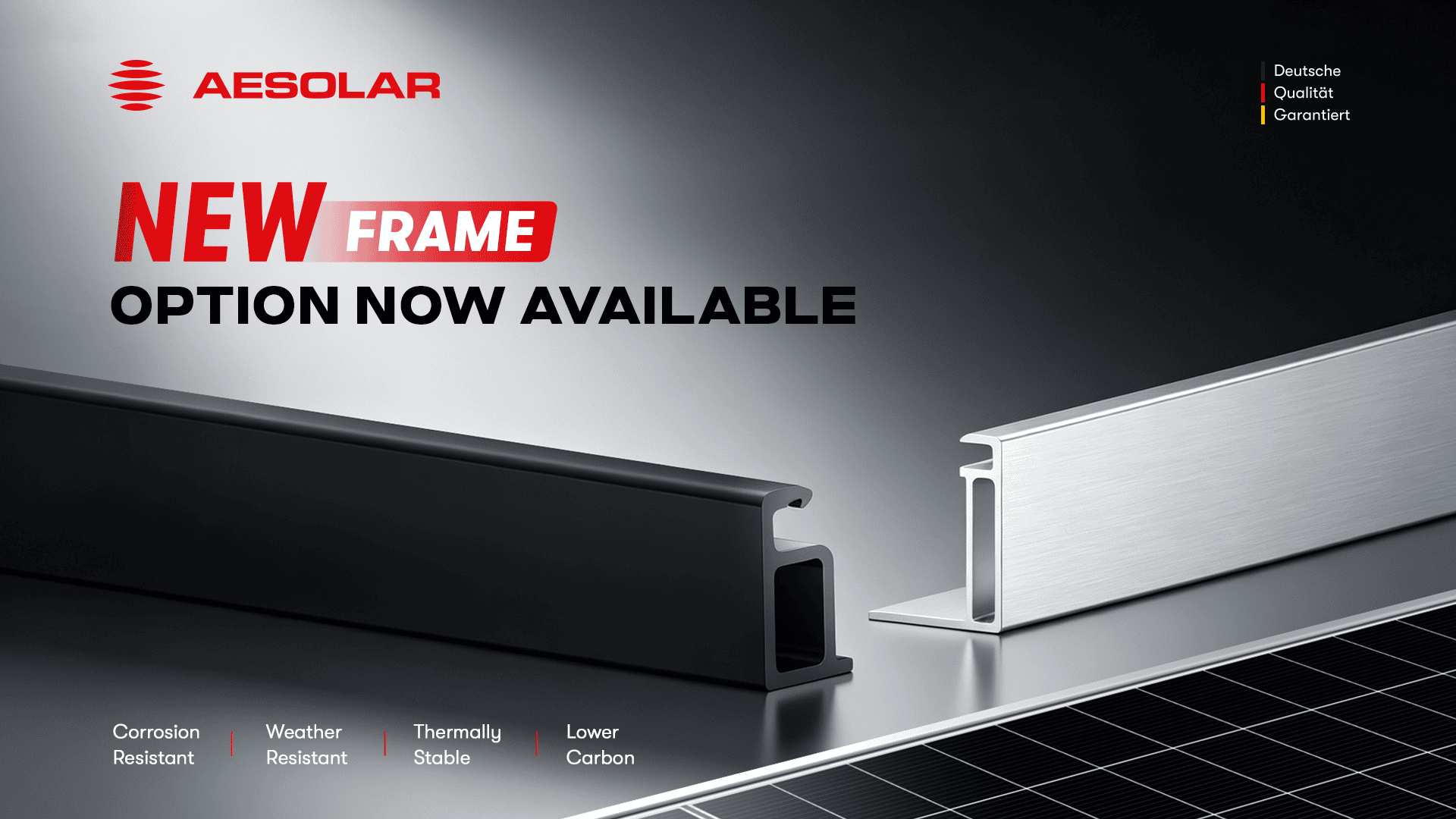
To give EPCs, distributors and project developers greater flexibility, AESOLAR is expanding its frame options. For most AESOLAR module series, excluding BC products, customers will be able to select a Fiber Glass Composite Frame as an upgrade option instead of the conventional aluminum alloy frame.
The objective is straightforward: match the frame design to the project environment.
Designed for demanding climates
Fiber glass composite materials offer several properties that can be particularly valuable in challenging installation conditions.
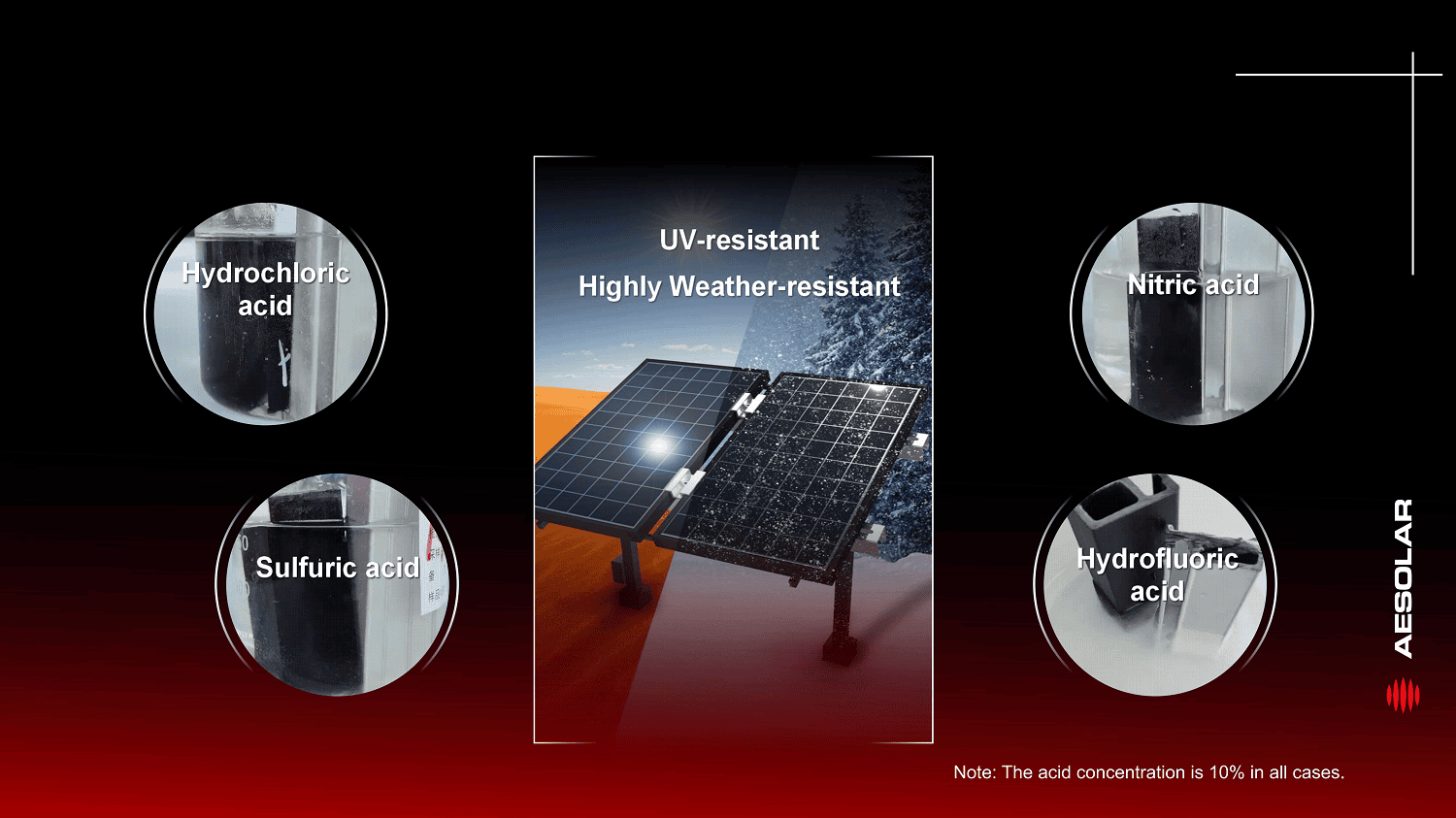
Enhanced corrosion and moisture resistance makes the composite frame well suited to coastal, tropical and high-humidity environments. Supplier testing includes resistance evaluation under high-concentration acidic conditions, while the frame design uses sealed connections to improve water resistance and protect the underlying material from hydrolysis.
This can be especially relevant for Southeast Asian projects, where high humidity, heavy rainfall and saline environments can place additional demands on long-term system durability.
Lower thermal expansion for extreme temperature cycles
Temperature variation is another consideration in module design. The composite material has a reported thermal expansion coefficient of approximately 9.6 ppm/°C, compared with around 23 ppm/°C for aluminum alloy and 8.5 ppm/°C for photovoltaic glass. Its closer thermal behavior to glass means less dimensional variation during repeated heating and cooling cycles.
For projects in high-temperature regions such as the Middle East, where intense daytime heat can be followed by substantial temperature changes, this characteristic can help reduce thermal deformation and associated mechanical stress.
The material also combines high mechanical strength with good dimensional accuracy. The supplier's technical data reports composite-frame strength of up to 1,500 MPa, together with a straightness level of approximately 0.5 mm/m.
Electrical insulation and lower-carbon potential
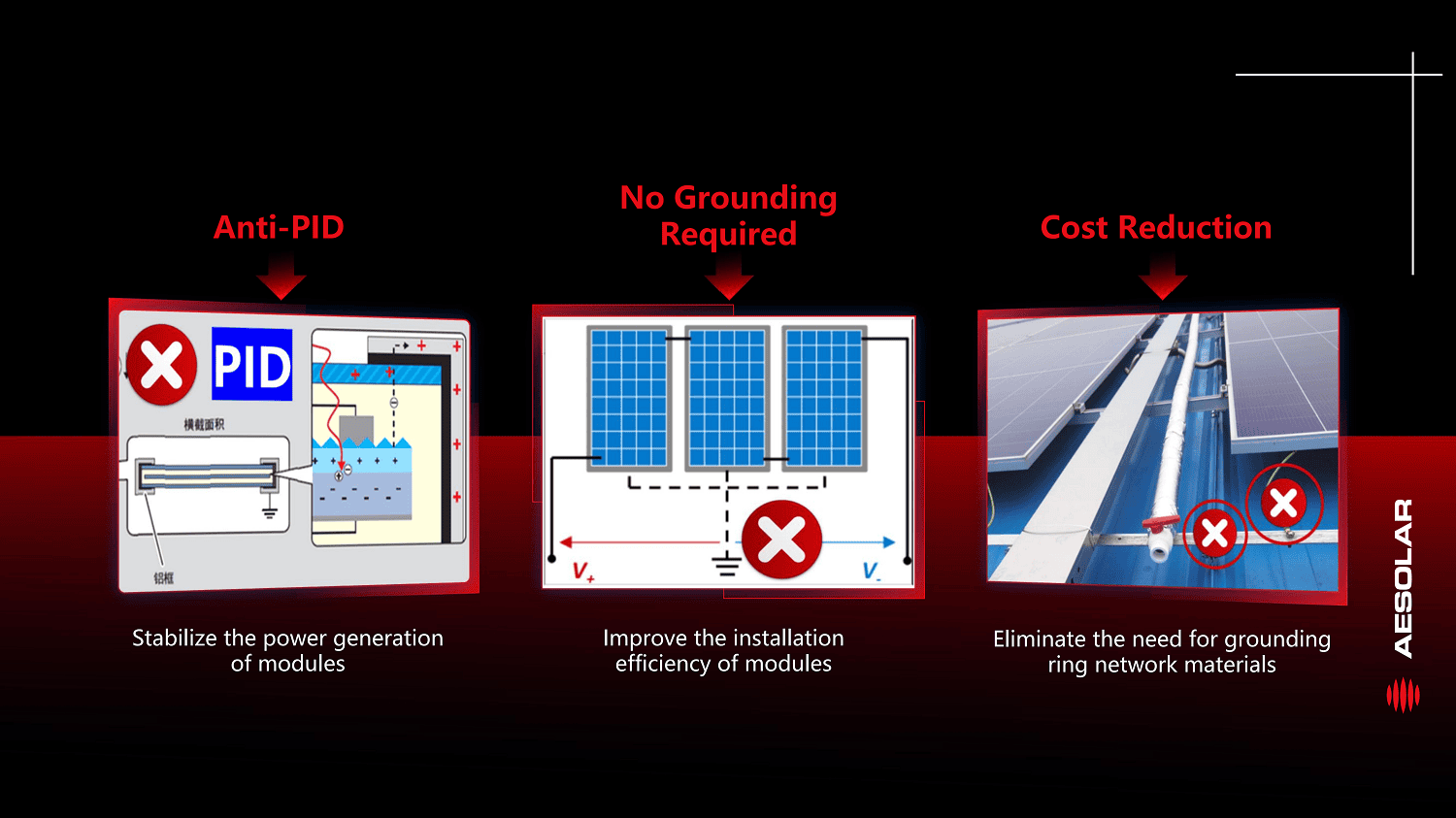
The composite frame is electrically insulating and designed around an anti-PID concept without requiring conventional grounding of the frame, potentially simplifying installation and reducing associated materials.
It also provides a lower-carbon material pathway. The supplied data indicates a carbon footprint of approximately 3.5 tCO₂/t for the composite material versus 24.2 tCO₂/t for aluminum alloy, based on the stated frame-material methodology.
For projects where carbon accounting, embodied emissions or market-specific environmental requirements are increasingly important, this can provide an additional dimension when selecting the module configuration.
One portfolio, more project flexibility
For EPCs and distributors, the value of the new option is not simply another material specification. It is greater freedom to configure the right solution for the right market.
A conventional aluminum frame remains a suitable choice for many projects. But where corrosion, humidity, extreme temperature cycling, electrical insulation or embodied carbon become more important considerations, the Fiber Glass Composite Frame provides an additional engineering option.
AESOLAR's composite-frame solutions have already been tested across demanding environments, including offshore, desert, extreme-cold, high-irradiance and humid-heat field conditions.
For project owners, this can mean a better fit between product configuration and site conditions. For EPCs and distributors, it creates an opportunity to offer more application-specific solutions while potentially reducing long-term maintenance considerations.
Different climates require different engineering choices. AESOLAR's expanded frame options are designed to give solar professionals more of them.
Explore AESOLAR portfolio: https://ae-solar.com/catalogue