September was one of AESOLAR's busiest months this year.
We started in Dubai, spoke at Europe's leading PV research conference, took our solar demo van to a local energy day in Bavaria, and extended our agrivoltaic range. Across Yemen and Iraq, new projects went into operation, showing German-engineered modules at work in some of the world's most demanding climates.
Here's a look back at the month's key highlights.
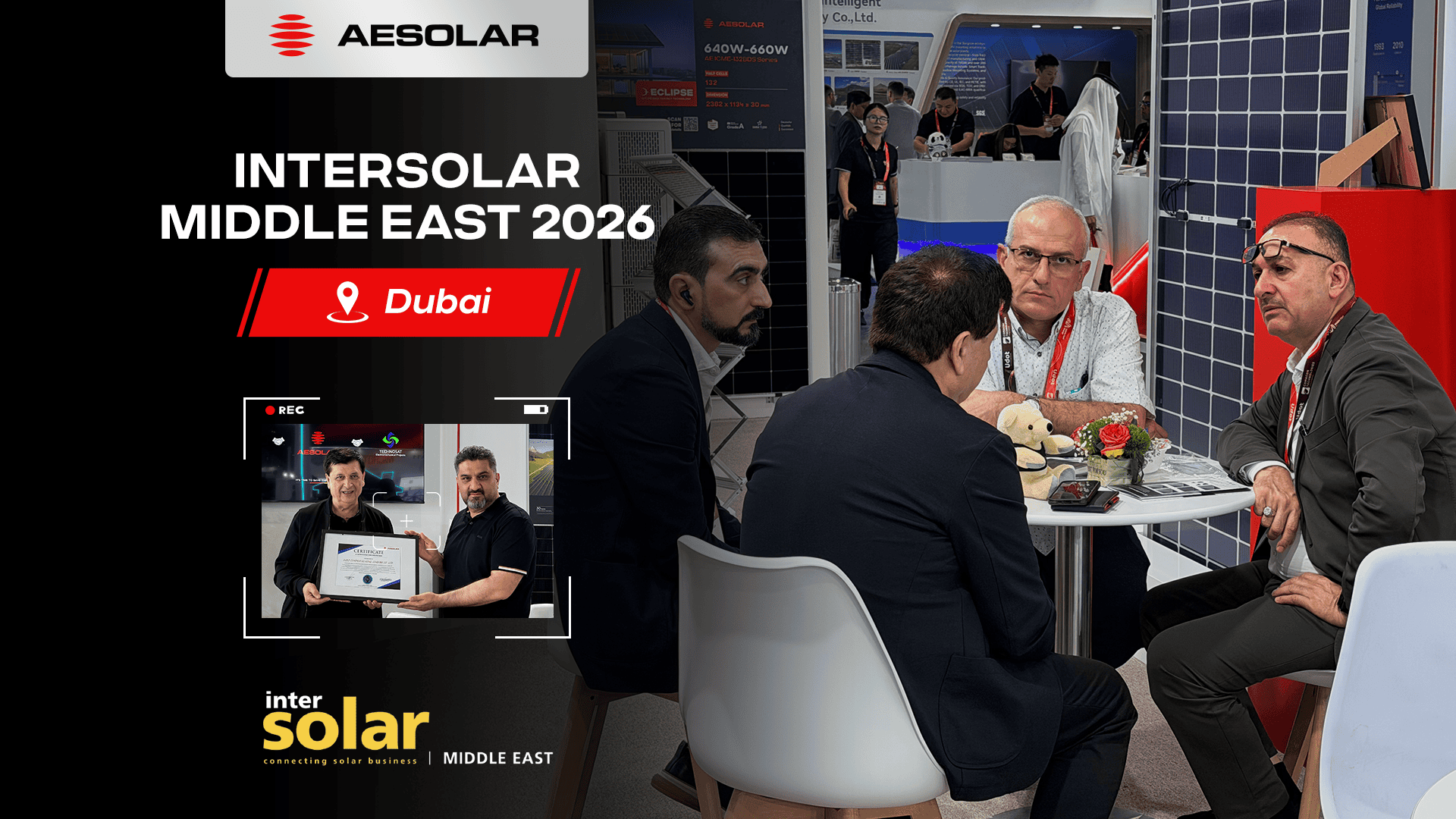
🌍 Connecting with MENA at Intersolar Middle East 2026
From 1 to 3 September, AESOLAR joined the 10th edition of Intersolar Middle East at the Dubai World Trade Centre. It was held alongside the 50th edition of Middle East Energy, which brought together more than 1,500 energy companies.
Over three days, we met distributors, EPCs and project developers from across the Gulf, the Levant and North Africa. Our conversations focused on one question: how do modules perform when heat, dust and irradiance are part of daily operation? Visitors explored our N-type TOPCon Meteor series together with our application-specific lines and residential storage solutions. We look forward to turning these conversations into projects across the region.
🔬 Sharing Field Experience at EU PVSEC 2026
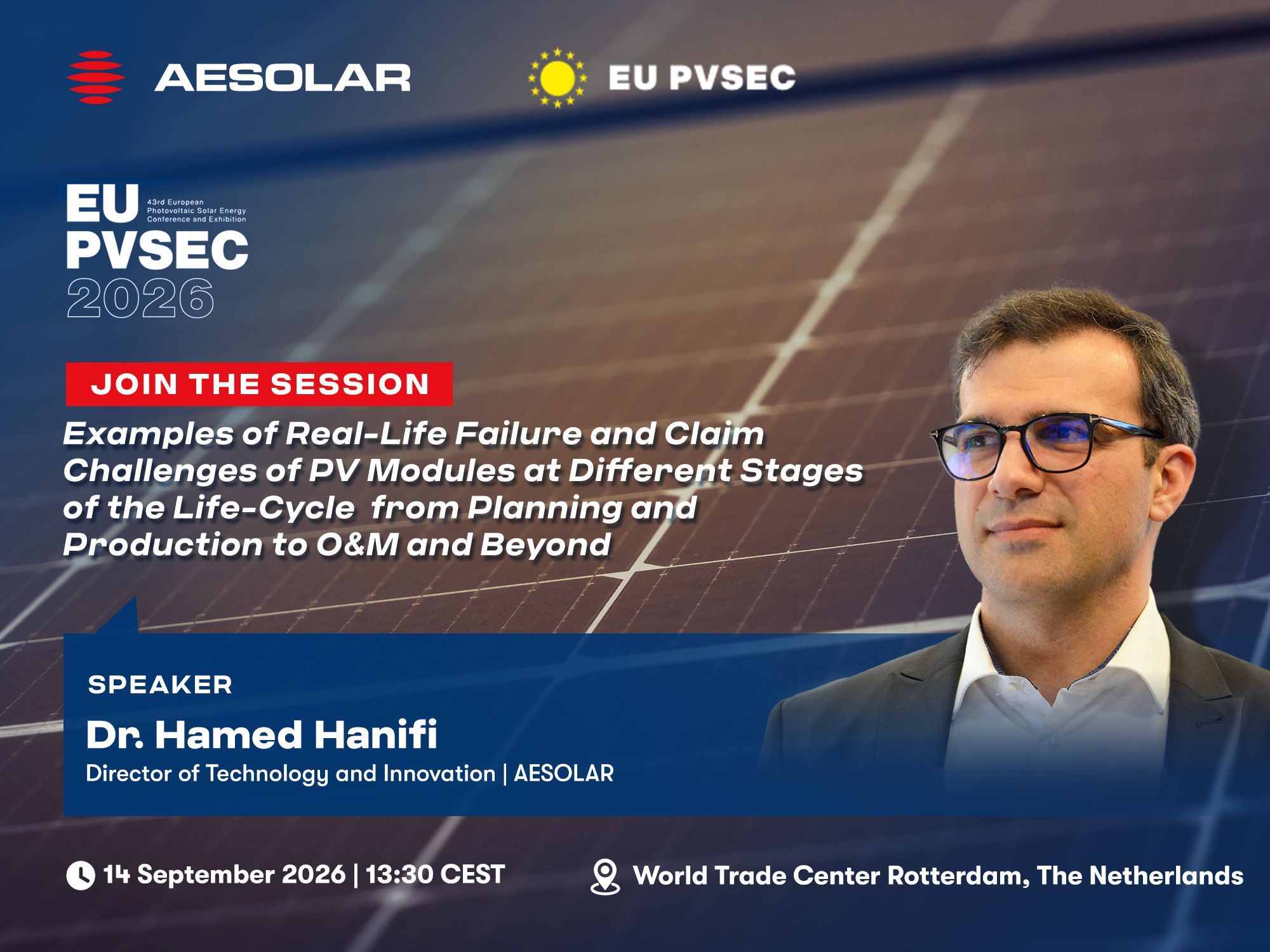
At the 43rd EU PVSEC in Rotterdam (14–18 September), Dr. Hamed Hanifi, AESOLAR's Head of Technology and Innovation, is giving a presentation on one of the PV research community's most important stages. Dr. Hanifi is a member of the EU PVSEC Scientific Committee.
In the Late News session on PV Module Reliability and Degradation, he presented "Examples of Real-Life Failure and Claim Challenges of PV Modules at Different Stages of the Life-Cycle." His talk moved the discussion beyond the factory gate. When a module fails in the field, how can we tell whether the cause is manufacturing, transport, installation, environmental stress or O&M? And how can Poka-yoke thinking make modules and processes more error-proof from the start?
This is the German-engineering mindset we bring to every project: we don't stop at passing the test, we look at what happens over 30 years in the field.
🚐 On the Road in Bavaria: AVS Energietag in Königsbrunn
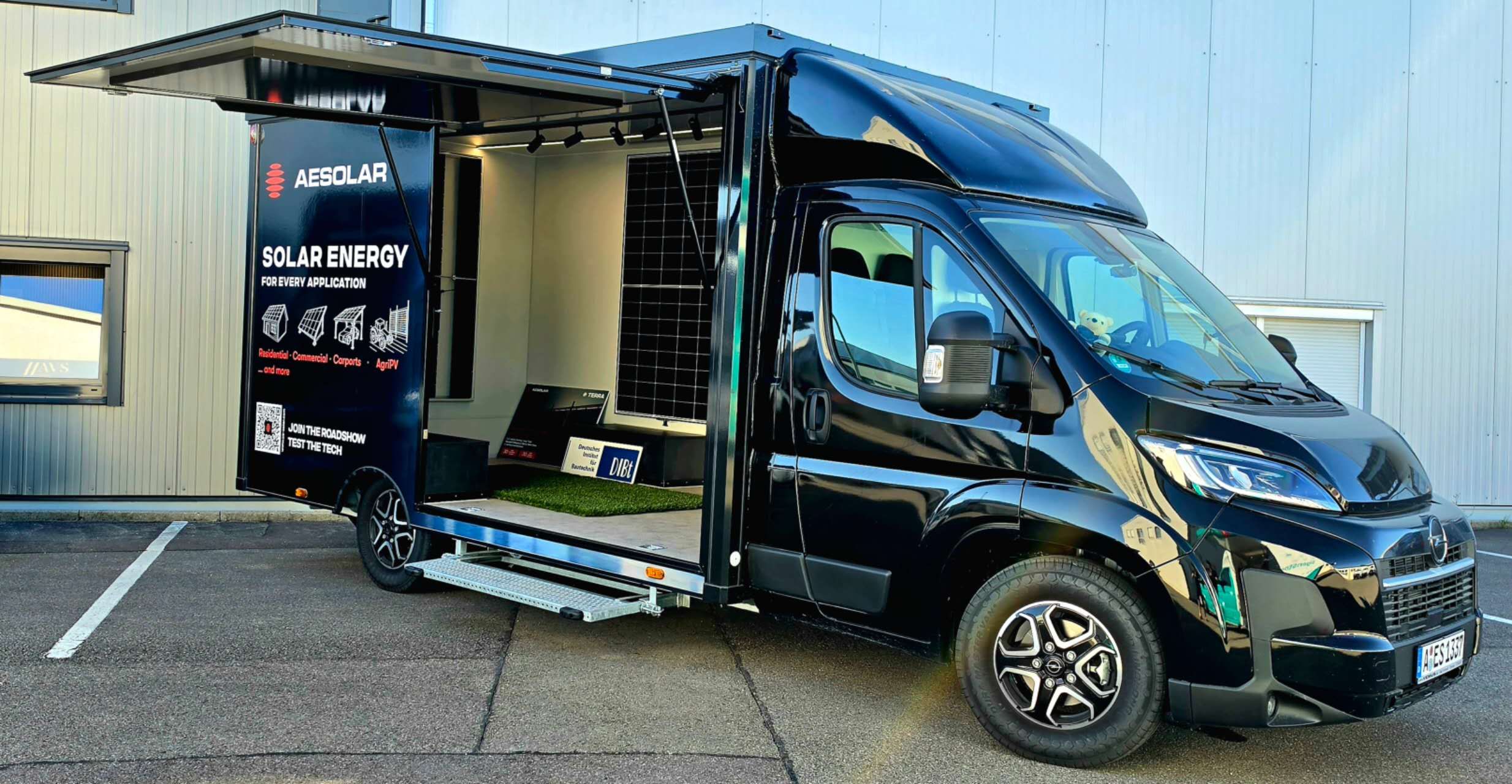
On 19 September, our solar demo van went to the AVS Energietag in Königsbrunn, just a short drive from our German headquarters.
As part of our High Five Roadshow, the demo van brings AESOLAR technology directly to installers, homeowners and local partners, so they can see the modules up close and talk through real applications with our team. It was a good reminder that German engineering starts close to home.
🌱 TerraE AgriPV Now Reaches 430W
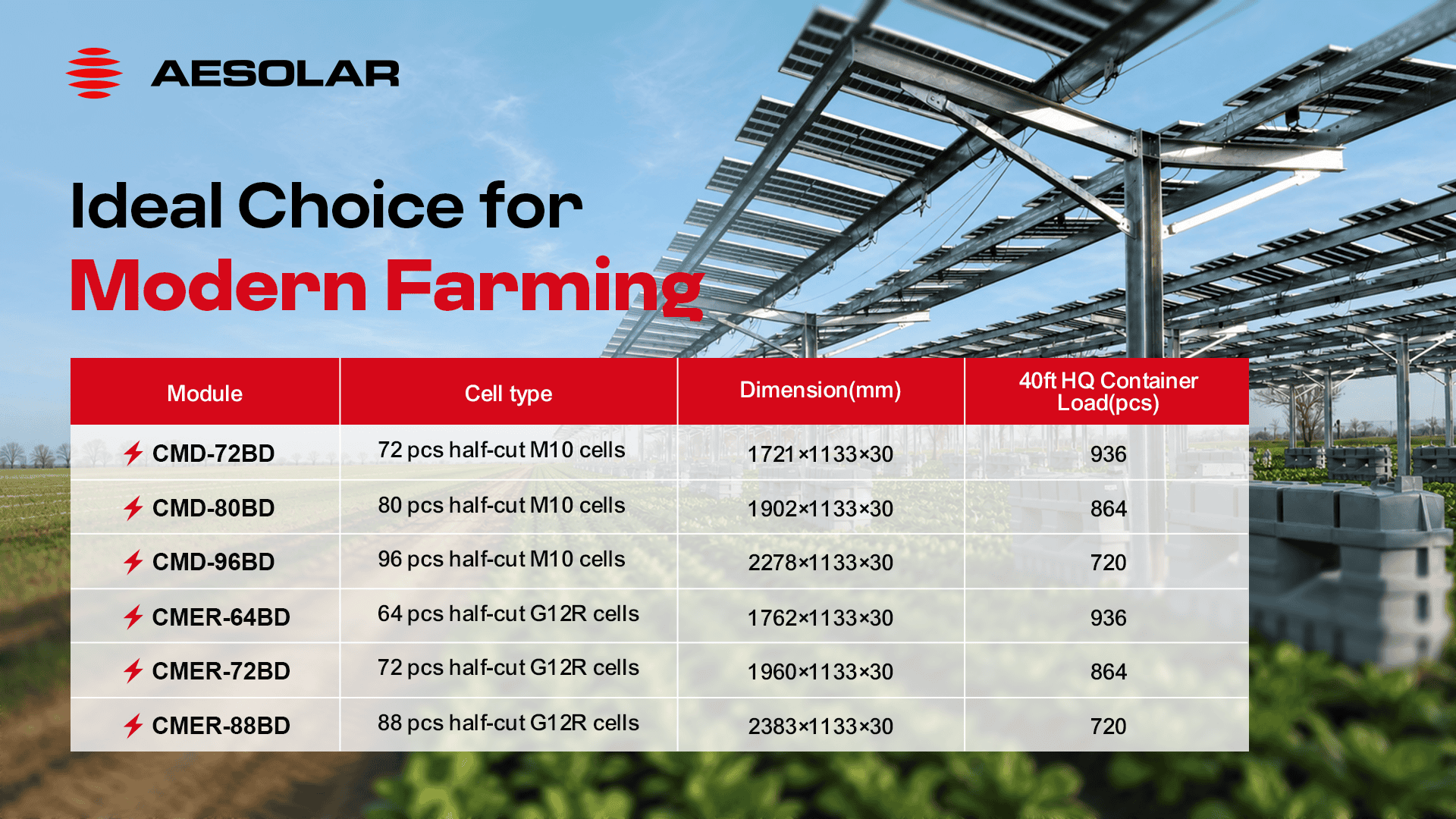
Our semi-transparent agrivoltaic series TerraE now spans 280W to 430W across six models.
Three new G12R-cell variants raise the top end of the range: CMER-64BD (290–310W), CMER-72BD (325–345W) and CMER-88BD (410–430W). They join the existing M10-cell CMD models. The principle stays the same: 40% light transmission so crops get the daylight they need, a bifacial double-glass build designed for mechanical loads, and up to 30 years of product and performance warranty.
More watts per row, without taking light away from what's growing underneath, opening TerraE to larger farmland and elevated-structure projects. → Explore TerraE: https://ae-solar.com/products/TerraE
☀️ 2.7 MWp of Meteor Power Under Yemen's Sun
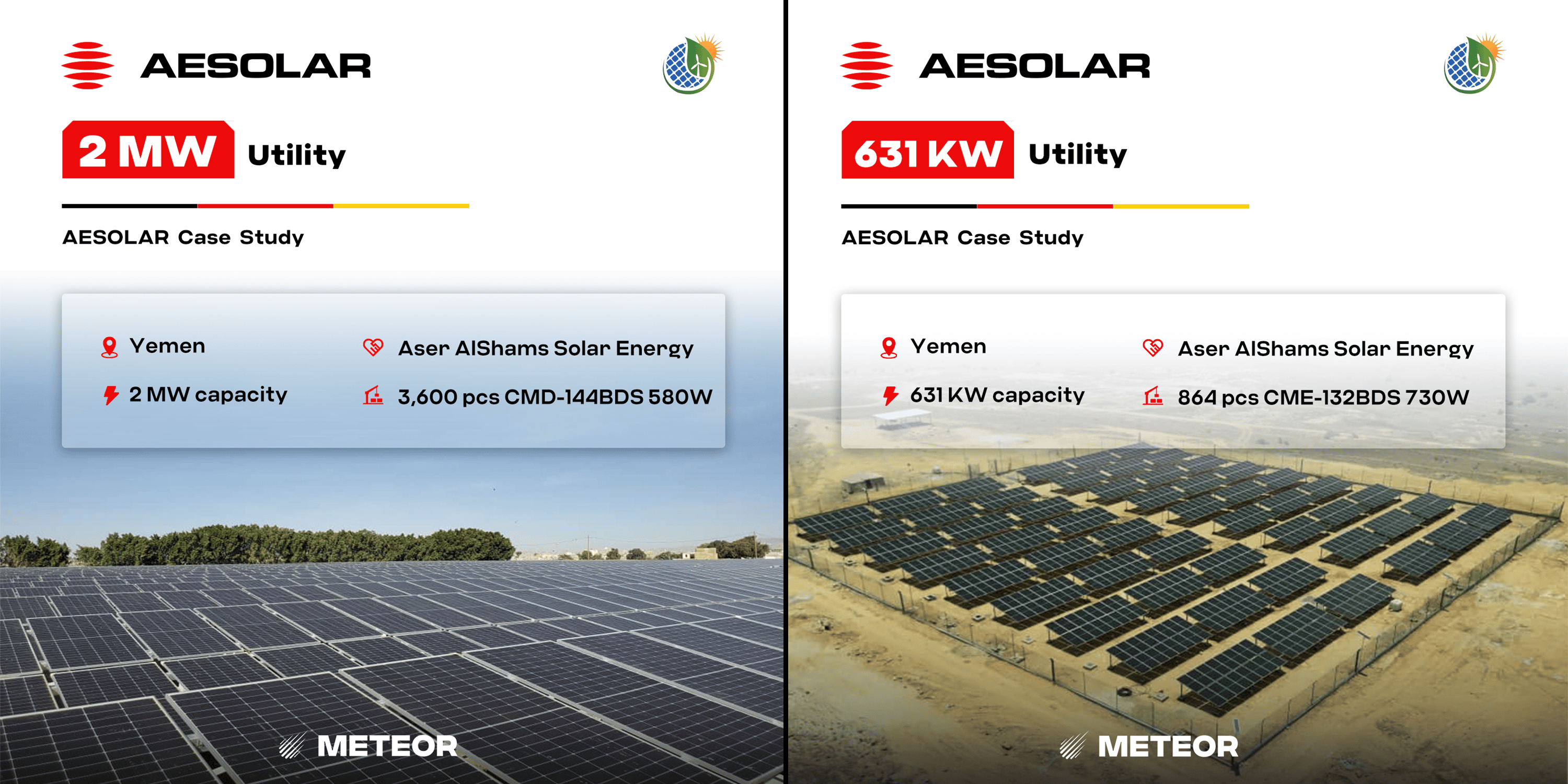
Two solar projects in Yemen are now running on AESOLAR Meteor modules. One plant uses 3,600 Meteor 580W modules, and a second project uses 864 Meteor 730Wp modules. Together that is around 2.7 MWp, expected to generate roughly 5 GWh of clean electricity a year.
Meteor is our N-type TOPCon series: 415W–730W, efficiency up to 23.53%, designed to hold its output in high-temperature zones. Both projects were delivered by Aser Alshams for Import and Trading, our certified exclusive distributor in Yemen. Congratulations to the whole team. → Explore Meteor: https://ae-solar.com/products/Meteor
🎓 1 MWp Powering a University Campus in Northern Iraq
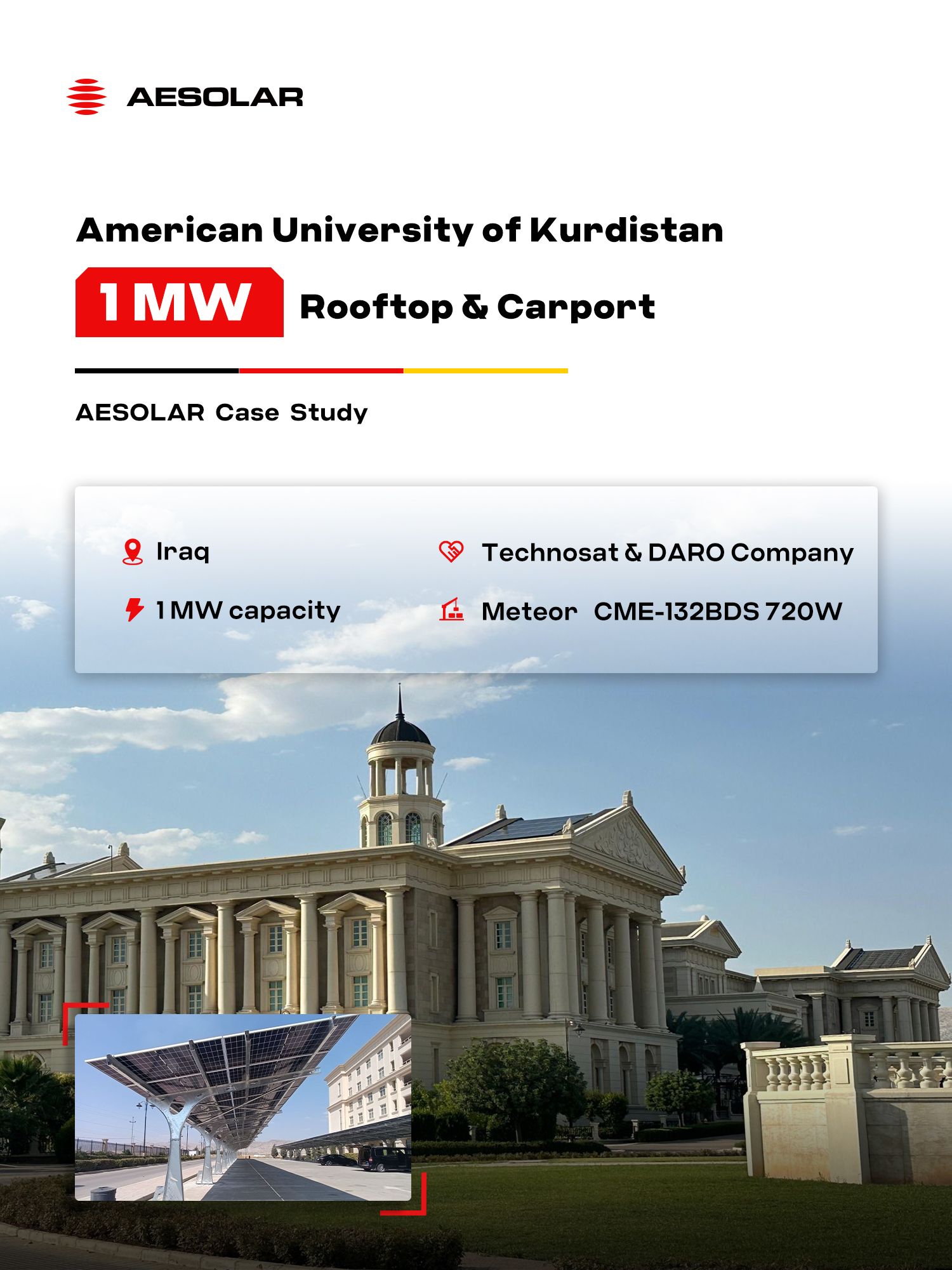
In northern Iraq, a 1 MWp solar project has been completed on a university campus. 1,300+ pcs of AESOLAR Meteor CME-132BDS modules, the system is set to generate an estimated 1.5–2 GWh of clean electricity a year for the campus, while giving parked cars shade against Kurdistan's summer heat.
Campus projects need reliable daytime generation that matches teaching and research hours, and they are a highly visible example of clean energy for the next generation. Together with our Yemen projects, this marks another step in AESOLAR's growing footprint across the Middle East.